Earlier this year, Microsoft posted a support document titled “How to optimize your gaming PC setup” where it said that 16 GB of memory is “plenty for most gamers” but “32 GB is ideal for serious players who run the most demanding titles or use heavy mods”. That document has since been deleted.
That’s as reported by Windows Latest, who noticed the change this week. Now, clicking on the link address to the support document redirects you to the Windows Learning Center instead.
Interestingly, Microsoft, in a separate support document, declared 32 GB to be the “no-worries” upgrade back in May, and that support document has since been deleted too. Two separate documents that recommend 32 GB of memory being taken down is certainly strange behaviour, and implies it wasn’t just an accident.
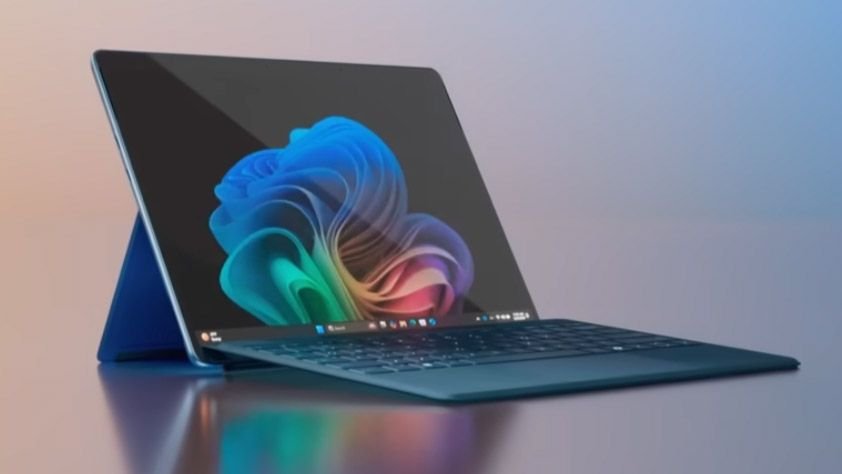
And it would make sense for Microsoft not to pitch 32 GB of memory, given that it just recently announced it would be bringing back 8 GB Surface laptops in May. Microsoft seemed to remove the 8 GB memory option in the 7th-generation Microsoft Surface and Microsoft Surface Pro 12th edition, which are the previous versions of both laptops.
These new laptops don’t even meet the memory requirements to be labelled a Copilot+ PC, and they’re mighty expensive, with the Intel Core Ultra 5 standard Surface with 8 GB of memory and 256 GB of storage being an eye-watering $1,299.
This is a shame as its initial assessment seems about right, in my estimation. 16 GB of memory is fine for most games, but 32 GB is ideal, especially for less casual gamers. I went for 32 GB of DDR5 memory in my own rig, and wouldn’t want less, but I also reckon I play more than most.
The memory crisis may be a problem for Microsoft, as suggested by a dip in console sales, but the company’s AI usage is also one of the larger contributors to the mess in the first place. The end consumer is paying for the expansion of AI in many ways, but the most pressing to a PC gamer is the fact that they’re paying more and more for less storage and memory.
As such, it would probably be a bad look for Microsoft to recommend 32 GB when its latest Surface Pro device will fetch a minimum of $2,750 to get so much memory. And Microsoft seems unlikely to backtrack on this pricing for some time. Samsung, one of the big three memory manufacturers, reckons we will see a “severe” memory supply crisis next year and “Beyond 2029, it is hard to say because of more limited visibility.”
AMD did a similar thing recently. After arguing gamers should look to “Game beyond 4 GB [of VRAM]” back in 2020, it has just recently launched a 4 GB graphics card, the RX 9050.
While these big companies continue to put more and more funding into AI, we’ll just have to sit with our meagre supplies of memory until it all blows over. Here’s hoping 2029 is the year things get better. Or is it 2030?