
Shadow IT includes hardware, software, and services running outside IT and security teams’ visibility or approval. It can include unapproved applications employees install, browser extensions with excessive permissions, and endpoints provisioned once and never enrolled in any monitoring platform. These unmanaged assets create visibility gaps because existing security controls do not monitor them.
Wazuh is a free and open source security platform that unifies SIEM and XDR capabilities across endpoints and cloud workloads. It collects system inventory data directly from each monitored endpoint, allowing security teams to compare what network scans report against what the Wazuh-monitored endpoints report.
This comparison helps identify unmanaged endpoints, unauthorized software, and monitoring gaps.
Shadow IT persists because the tools that report findings often can’t observe the assets in question. Understanding where the gaps form helps security teams decide which controls to extend.
Addressing these categories requires endpoint telemetry and additional data sources for devices that cannot run an agent.
Wazuh helps organizations reduce shadow IT exposure through continuous system inventory collection, centralized analysis, and correlation of inventory data with vulnerability and policy information. The following capabilities help security teams identify unmanaged assets and unauthorized software across their environment.
Shadow IT is a visibility problem before it is a policy problem. Organizations cannot enforce a software baseline on assets they cannot see, and network scanning alone shows only the systems that respond during a scan.
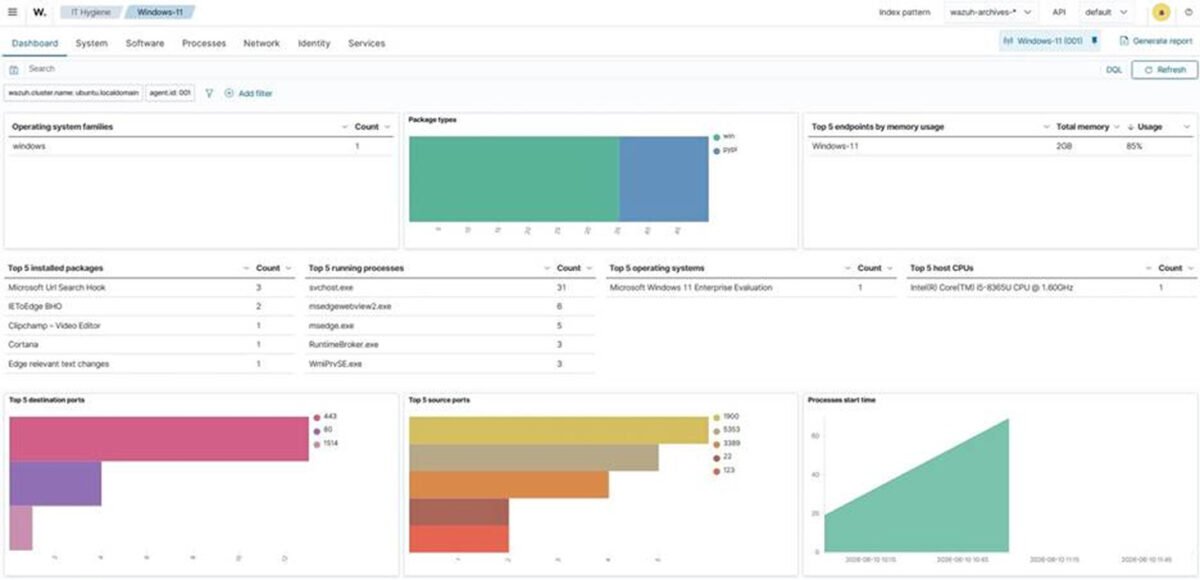
Wazuh helps reduce this visibility gap by collecting inventory from monitored endpoints and ingesting data from configured agentless sources. Endpoint inventory shows what is installed, running, and listening on each host, while agentless monitoring and syslog ingestion extend visibility to supported devices that cannot run a Wazuh agent. Wazuh agent enrollment states also help security teams measure monitoring coverage instead of assuming it.
With this data indexed centrally, security teams can identify vulnerabilities, investigate inventory across monitored endpoints, compare software with lifecycle information, and initiate configured remediation for applications outside the approved software baseline.
Discover more about Wazuh by exploring its documentation and joining its growing community of professionals.
Researchers escape OpenAI Codex sandbox to run commands on host
Malicious npm packages evade install-script defenses at runtime
Microsoft reminds admins to migrate Entra ID users to passkeys
Find out how long recovery really takes — and what it costs. Read the 2025 BCDR Report.
Automate Onboarding and Access Reviews with No-Code IGA: See how it works
Overdue a password health-check? Audit your Active Directory for free
Overdue a password health-check? Audit your Active Directory for free
Build cyber resilience with Wazuh: The open-source SIEM & XDR for proactive protection
Terms of Use – Privacy Policy – Ethics Statement – Affiliate Disclosure
Read our posting guidelinese to learn what content is prohibited.